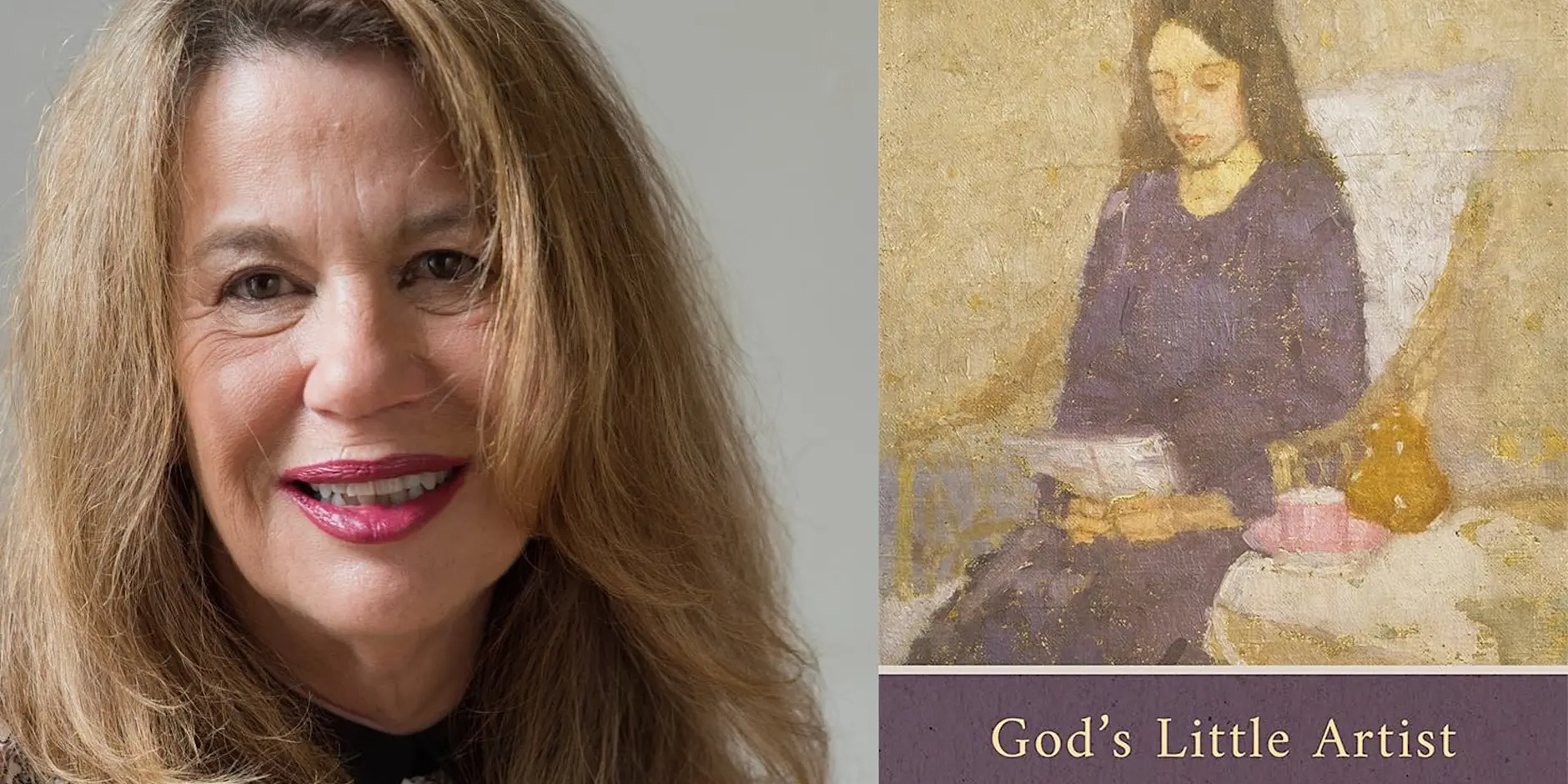
The Friends are delighted to welcome back novelist and art critic Sue Hubbard to discuss God’s Little Artist, a biography in verse of Welsh painter Gwen John (1876 - 1939).
As with many female painters of the time, John’s work was often overshadowed by that of her male contemporaries, especially her brother Augustus John. God’s Little Artist is a celebration of her, her passionate life and work, illustrated with precision, authenticity and the keen painterly eye of a poet, novelist and art critic.
This promises to be a fascinating evening.
Admission free.
Organised and hosted by the Friends of Carnegie Library, grateful for assistance from the Lambeth Library Service
Reservations are not strictly necessary, but we do ask people to register at Eventbrite, to help with planning.
Tuesday evening, 14 April: 7 - 8:30 pm at The Carnegie Library
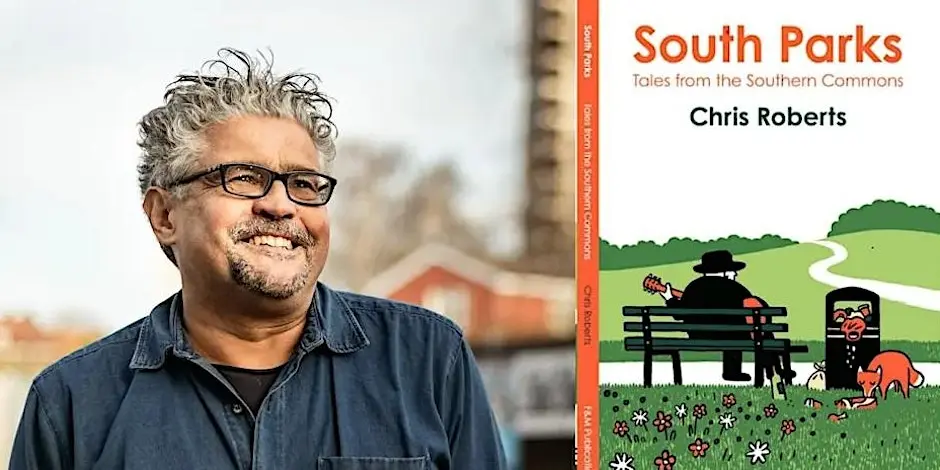
South Parks is a collection of twenty short stories set in, about or around a selection of South London open spaces. Inside are talking statues, strange cults, pagan estate agents and a very wrong horse. There are foxes and a vengeful toilet goddess but also stories of love, friendship, family life and growing up.
Expect anti-golf riots and stolen geese as we celebrate places to sit in, places to play in and places to spend the day in alongside contemporary (and older) threats to the concept of free open spaces in London. There may also be references to park toilet goddesses, pagan estate agents, mermaids looking for a mate and Peckham Rye’s gay cultural renaissance alongside a celebration of south London’s open spaces. The talk will switch between the real and the magically real and is based on his book South Parks: Stories from the Southern Commons.
Chris Roberts is a London writer and tour guide who has written books on the history of nursery rhymes, London's bridges, lost words and superstition in football. He has been conducting walking tours around London for most of this century.
The Friends of Carnegie Library invite you to attend this event with Chris Parks, which is part of our monthly series of Author Events, always on the second Tuesday of the month, always at the Carnegie Library (except once during covid), always Admission Free.
The event will start at 7 pm but please come early for tea & cakes, from 6:30.
Reservations are not strictly necessary, but we do ask people to register at Eventbrite, to help with planning.
We thank the librarians at Carnegie Library for their assistance with staging this event, and indeed for all their dedication and efforts which keep the Carnegie Library running as the great and much loved community library that it is for Herne Hill and Loughborough Junction and environs.
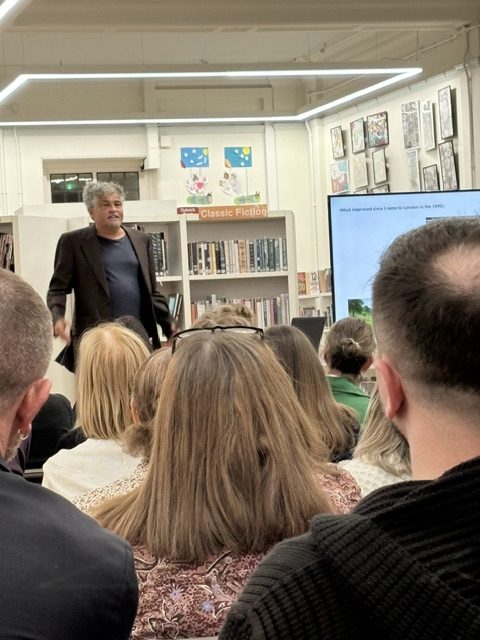
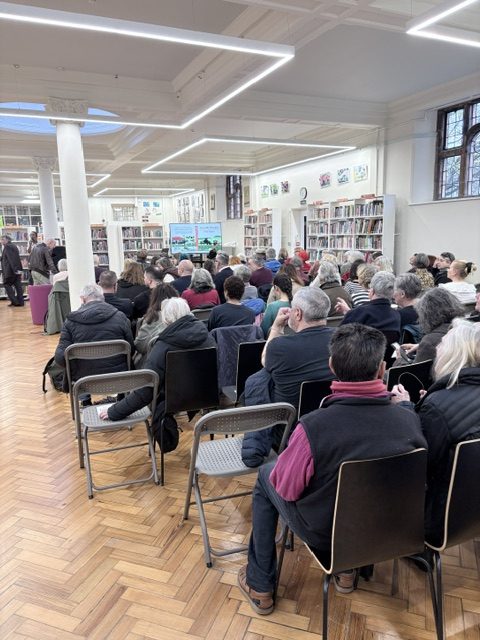
The event was well attended by a very appreciative audience.Many thanks to Chris and to all who attended for making this a memorable occasion.
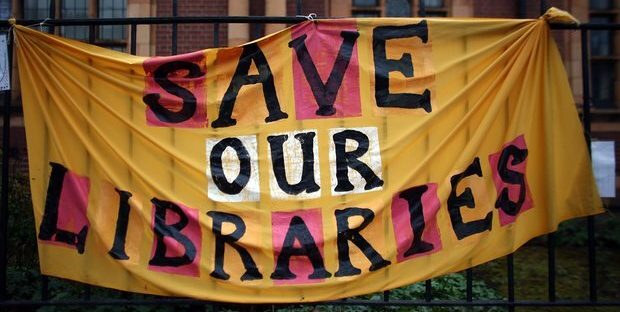
On 31 March, 2016 Lambeth Council closed the Carnegie Library for an indefinite period, but local residents refused to leave and remained in occupation for 9 days
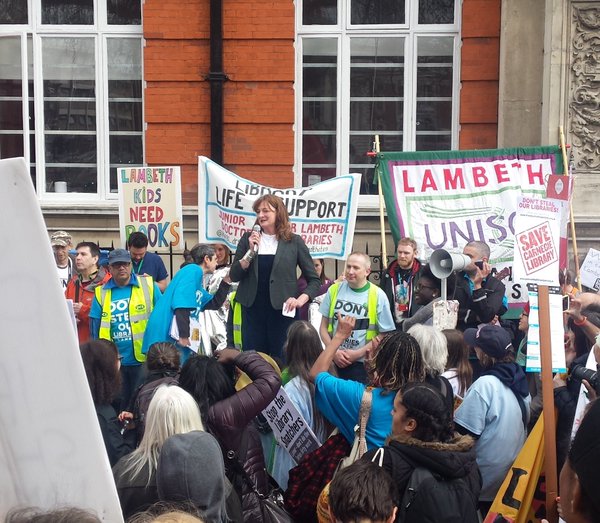
When they left, following a court order, they marched to Lambeth Town Hall accompanied by a thousand-plus supporters
This became national and international news
*
2pm Refreshments; 3 - 4:30pm Reunion
All welcome!
If you were there, share your stories, photos and souvenirs -
if you weren't, come and find out what happened!
*
Hosted by The Friends of Carnegie Library
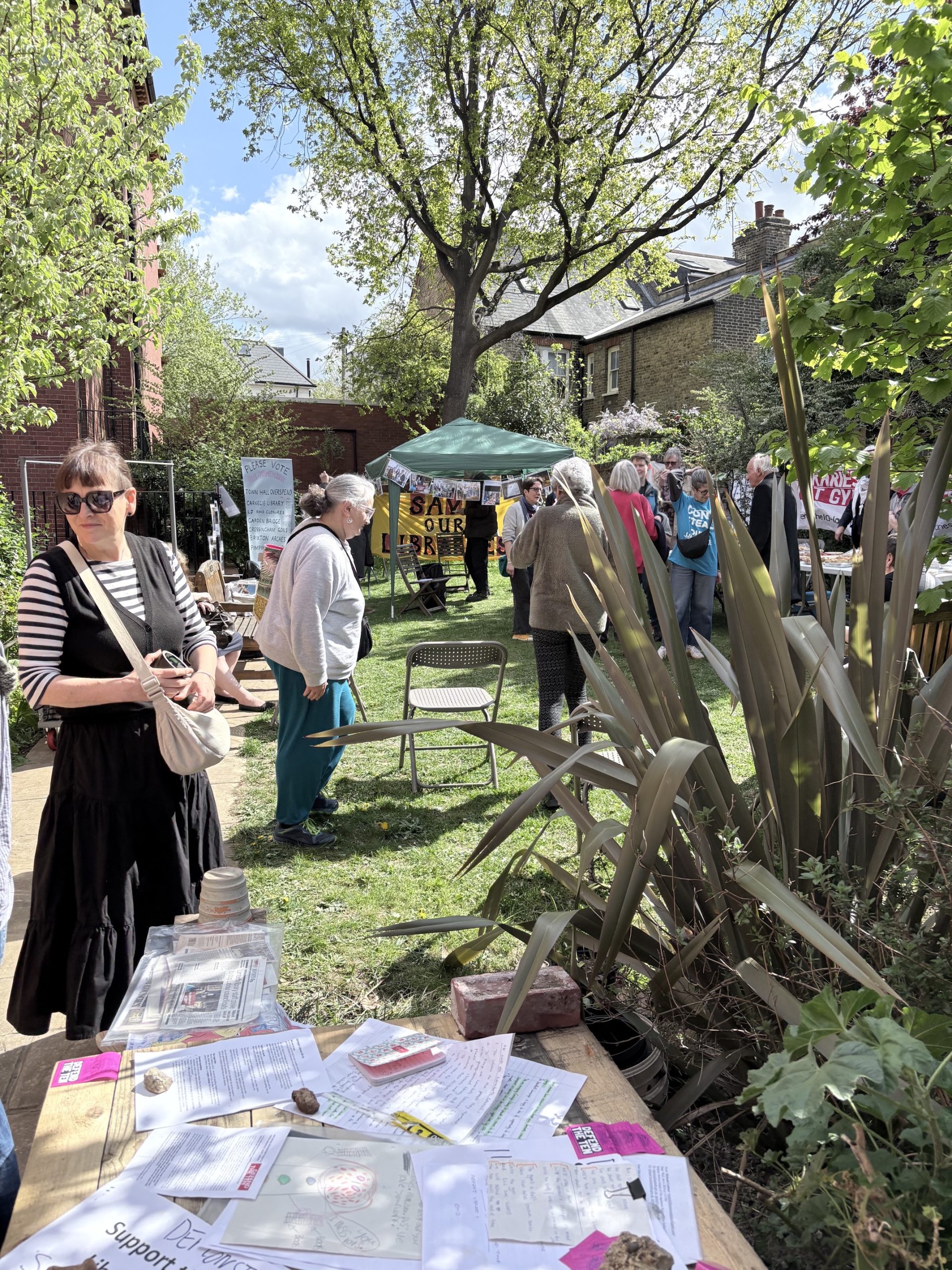
Many thanks to all who attended (on Saturday and ten years ago)
There was laughter and there was tears and much to celebrate. We did it. We defended the ten. Ten years ago the Lambeth Council was talking seriously about closing libraries in its network and running some of them without librarians. That didn't happen. We still have ten libraries in Lambeth and they are all staffed by professional librarians. It was the "Occupation" wot done it, becoming for almost two weeks a focal point for local, national and even international news cycles.
Losses there have been. We miss the children's library in the front room (arguably once the bigliest and bestliest local children's library in the world) and the dedicated art gallery and meeting room next to it. Our librarians are under-staffed, working stretched and chaotic shifts to keep things going, and many thanks to them for that. The budget for new books has been axed (but somehow new and interesting titles keep appearing on the shelves). We miss the extra rooms, for the students to study in peace, for adult literacy groups (Ruskin Readers once used to call the Carnegie Library home), for the fabulous chess club, and our reading & wildlife garden is not what it once was, we cannot pretend otherwise. But the Carnegie Library Library is still here, there are still ten libraries in Lambeth, we still have a very talented team of professional librarians working for us, and the Council can be in no doubt of the importance of local libraries to the community.
On Saturday we also remembered Rachel Heywood, who could not be with us but sent a moving message that was read out. Rachel was the only councillor in the ruling party who acknowledged the community support for the libraries in opposition to proposed cuts. She spoke out on numerous occasions and she was there in front of the Brixton Library, speaking to and for the two thousand people reportedly who marched from the Carnegie Library to Windrush Square when the occupation ended. This ended her career in Lambeth politics.
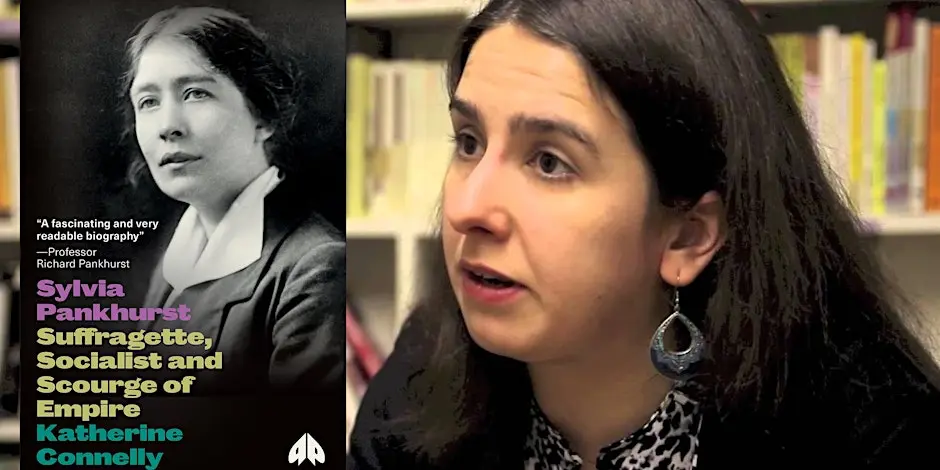
We are delighted to welcome Katherine Connelly to discuss her book Sylvia Pankhurst: Suffragette, Socialist and Scourge of Empire. This is part of International Women's Day celebrations.
Katherine Connelly is a writer and historian known for her significant contributions to the field of history. In addition to this biography of Sylvia Pankhurst she has edited A Suffragette in America: Reflections on Prisoners, Pickets and Political Change.
Sylvia Pankhurst: Suffragette, Socialist and Scourge of Empire focuses on Sylvia Pankhurst's activism as a prominent suffragette and socialist leader and her role in the British anti-war movement.
As a historian of the suffragette movement Katherine Connelly has featured on Netflix in the documentary series A Tale of Two Sisters and on Channel 4 in Secrets of a Suffragette. In 2014 for BBC Radio 4 she presented a four-part mini series on women's history in East London.
Her books provide valuable insights into the struggles for social change and the importance of political activism.
Admission is free.
Organised by the Friends of Carnegie Library, in cooperation with the Lambeth Librarians.
Tuesday, the 10th of February, from 7 pm to 8:30 pm
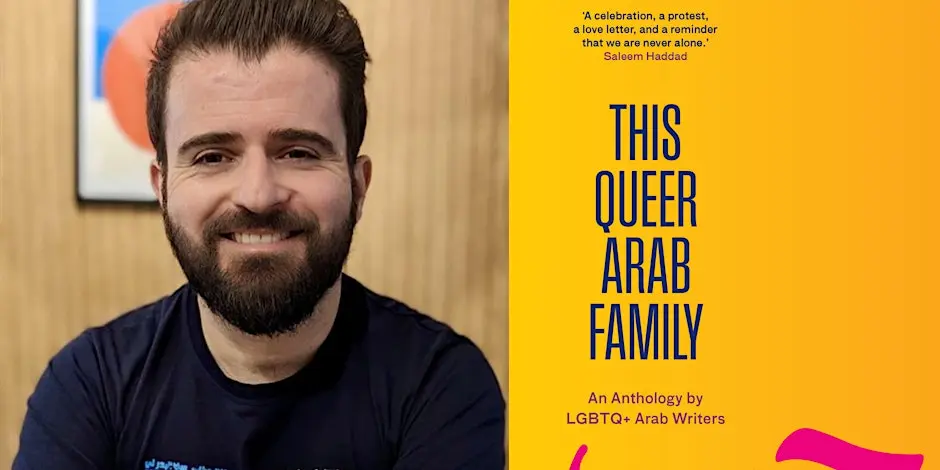
This Queer Arab Family celebrates the beauty of chosen kin and the everyday acts of care and survival that bind Queer Arabs to each other. Ten LGBTQ+ writers from across the Arab world and diaspora redefine what family looks like, from raising children with mum and mum, to becoming an OnlyFans star and building a non-binary belly dancing robot. These writers illuminate, through their own lived experiences, how queer joy and community can be found in the most unexpected places.
This Queer Arab Family honours the spirit of those who, despite challenges, build community and family on their own terms.
Elias Jahshan is a Palestinian-Lebanese journalist and writer, and editor of This Arab is Queer: An Anthology by LGBTQ+ Arab Writers (Saqi Books; 2022) - which was a finalist in the 2023 Lambda Literary Awards in the USA and shortlisted for the 2023 Bread & Roses Award in the UK.
His short memoir Coming Out Palestinian was anthologised in Arab, Australian, Other: Stories on Race and Identity (ed. Randa Abdel-Fattah & Sara Saleh; Picador, 2019), while Bittersweet Memories of a Palestinian Knight was anthologised in Ask the Night for a Dream: Palestinian Writing From the Diaspora (ed. Susan Muaddi Darraj; Palestine Writes Press, 2024). Elias is also a former editor of Star Observer, Australia’s longest-running LGBTQ+ media outlet, and has been published in The Guardian, Gay Times, The New Arab, Raseef22, Shado Mag, My Kali.
Born and raised in Sydney, he now lives in London.
Go to Eventbrite for more information and to book a place. Admission is free (and booking is optional, but helps with planning.)
Organised by the Friends in co-operation with the Lambeth Library Service.
This website uses cookies to improve your experience; however you are welcome to opt out. AcceptRead More
Privacy Policy
Privacy Overview
This website uses cookies to improve your experience while you navigate through the website. Out of these, the cookies that are categorized as necessary are stored on your browser as they are essential for the working of basic functionalities of the website. We also use third-party cookies that help us analyze and understand how you use this website. These cookies will be stored in your browser only with your consent. You also have the option to opt-out of these cookies. But opting out of some of these cookies may affect your browsing experience.
Necessary cookies are absolutely essential for the website to function properly. This category only includes cookies that ensures basic functionalities and security features of the website. These cookies do not store any personal information.
Any cookies that may not be particularly necessary for the website to function and is used specifically to collect user personal data via analytics, ads, other embedded contents are termed as non-necessary cookies. It is mandatory to procure user consent prior to running these cookies on your website.